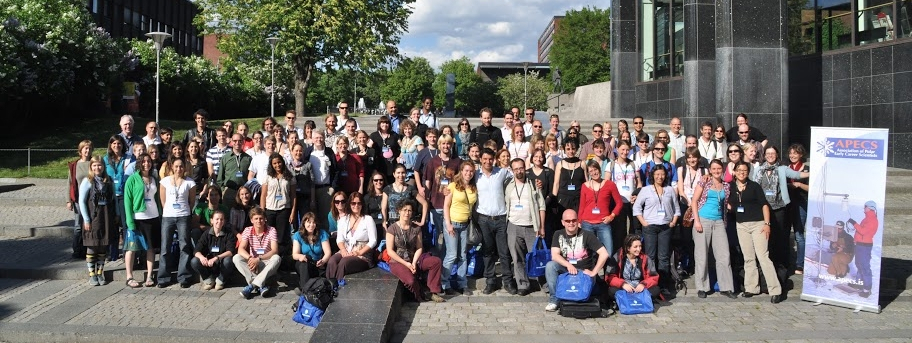
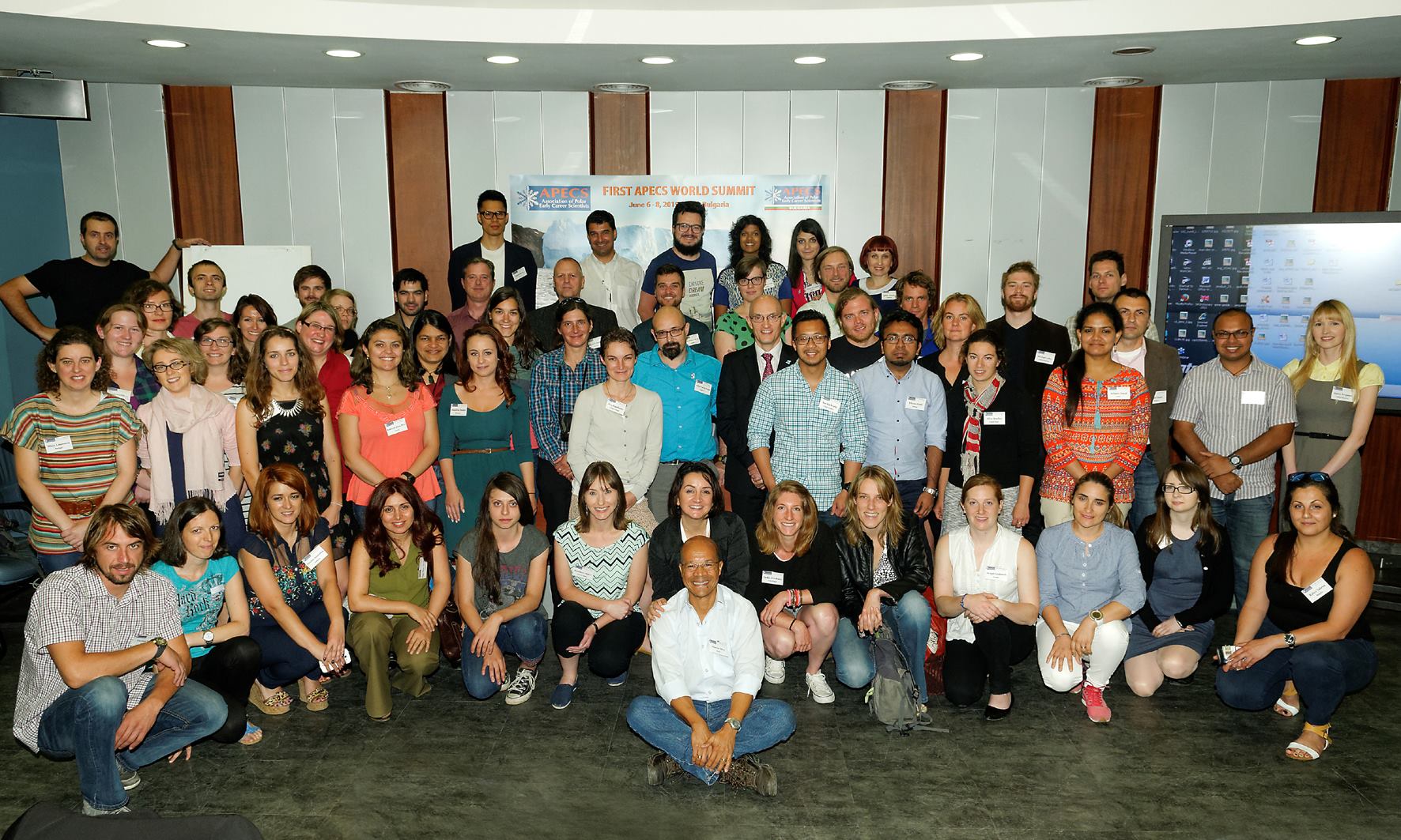
 APECS organized its first APECS World Summit in Sofia, Bulgaria from 6 - 8 June 2015. Since its success during the International Polar Year (IPY), APECS has been grown significantly. At the time of the summit, APECS's membership counted about 5000 early career scientists, mentors and educators with interests in the Polar Regions in over 80 countries. But APECS has also evolved institutionally with currently 26 National Committees (NCs) across all continents – except Antarctica. The APCES World Summit 2015 "The Future of Polar Research" was an initiative to bring representatives of APECS' leadership and NCs together to discuss the future of polar research, APECS' experiences in communicating science and new challenges APECS wants to tackle in the near future. The venue for the APECS World Summit 2015 was Sofia Univeristy.
The Association of Early Polar Career Scientists (APECS) held its first world summit in Sofia, Bulgaria, from June 6-8, 2015.
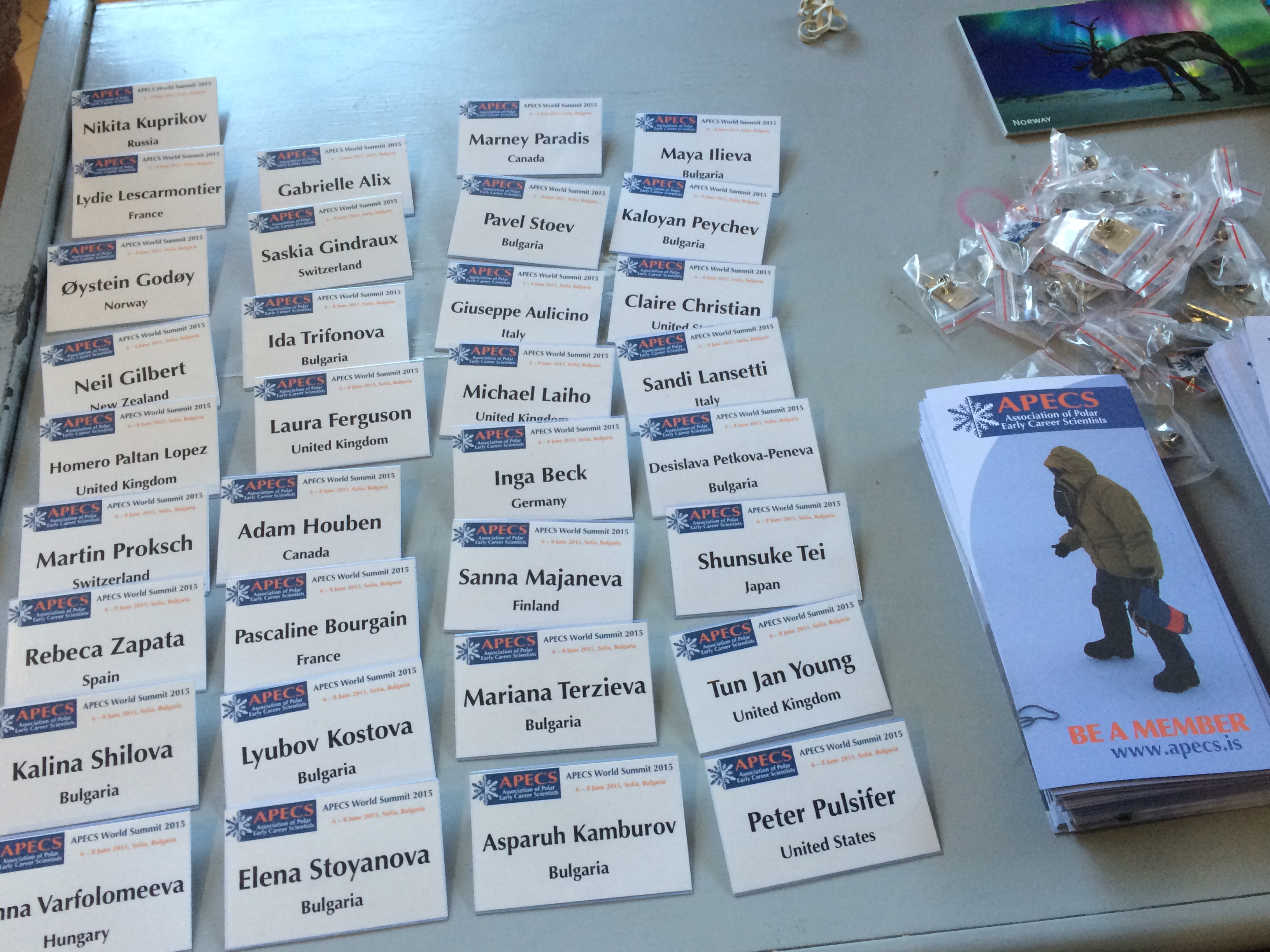 Sixty-six early career scientists and APECS members, representing 25 countries and 20 APECS National Committees (NCs) participated in the event. In addition, 12 senior scientists and professionals attended the summit (2 of them remotely), supporting APECS as mentors. The diversity of the summit participants was not only characterised by their origin but also academic field and profession. Yet, all participants had a sincere interest in the Polar Regions in common. The APECS World Summit was considered a bi-Polar event, equally committed to the Arctic and the Antarctic.
The programme of the summit constituted three full days and was structured into 4 workshops:
- Training workshop on Data Sharing and Open Science in Polar Research
- Workshop on The Future of Polar Research
- Workshop on Science Communication
- Workshop on The APECS Network and Future Directions
Workshops included presentations by invited mentors as well as the APECS leadership and NC representatives, breakout sessions, a panel discussion, and consultations and discussions within the plenary. The full program, including list of mentors, participants, and sponsors is at: http://www.apecs.is/events/upcoming-event-highlights/apecs-world-summit-2015.html.
In the evenings during the summit, several social events took place; an icebreaker reception on the night before the opening of the summit, an informal dinner with traditional Bulgarian dance performances, and the conference dinner. These events fostered interactions between participants. Mentors were also invited and joined the social events.
The summit was generally perceived as a great success. APECS is planning to continue convening world summits on a regular basis, every 2 to 5 years.
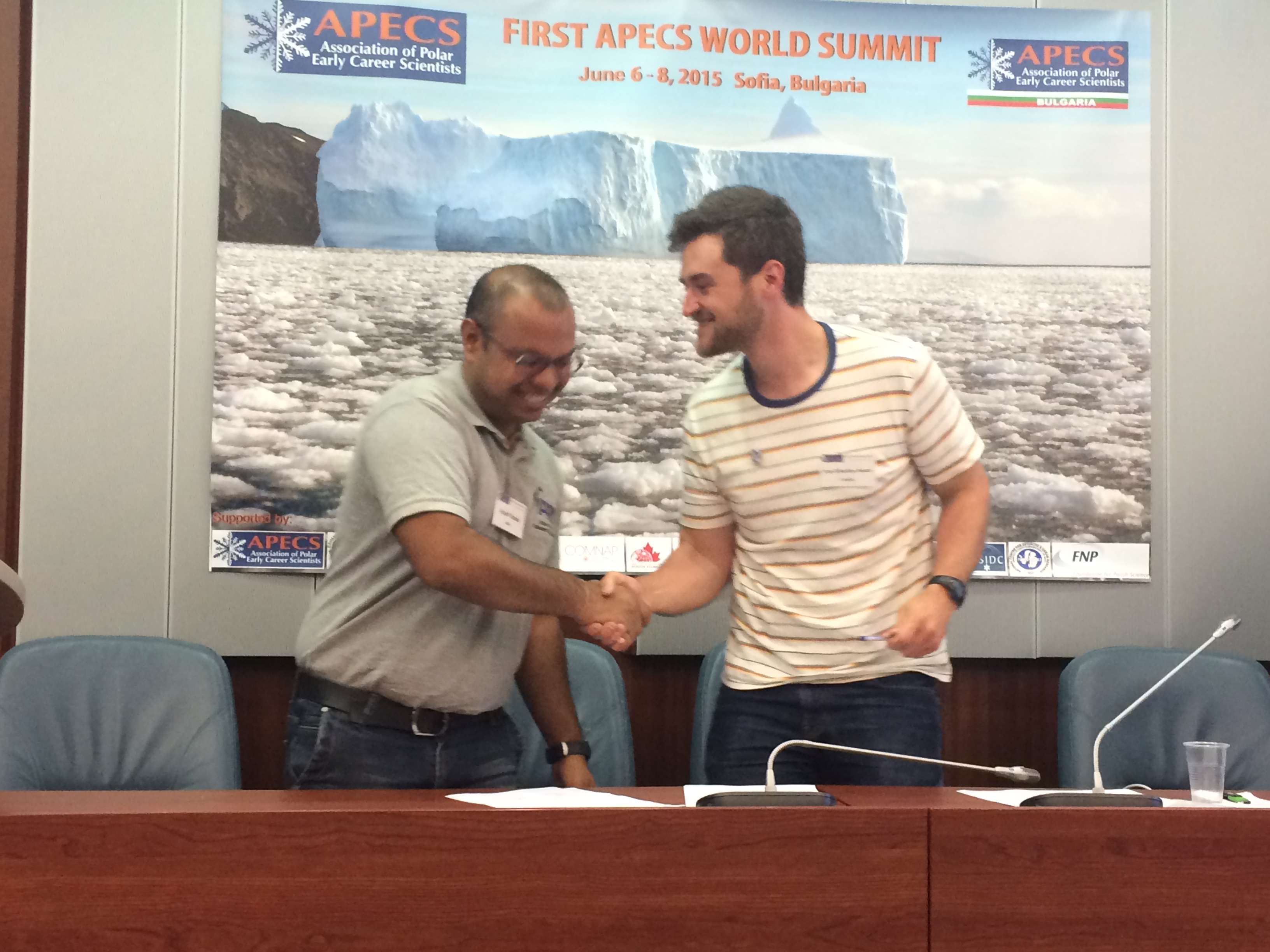
Major outcomes of the Summit included: an understanding of the importance of open data, and how open science can be accomplished through the use of databases, data standardization, and data publications, a vision of the future directions of polar research, which includes increased understanding of the global impacts of what happens at both poles, and a focus on human interactions and warming in the Arctic and changes in the Southern Ocean and to ice in the Antarctic. In addition, Letters of Agreement were signed between APECS and National Committees from Canada, India, Switzerland, the United States, and Russia. Welcome to our new National Committees!
 APECS is providing partial travel support for several summit participants
 Assarel-Medet JSC Mining and Processing Complex is the first, biggest and leading Bulgarian company for open pit mining and processing of copper ores providing around 50% of the national production of the vital metal for the human development - copper. It has a structural-determinant significance for the Bulgarian economy, as one of the leading industrial company with an important contribution to the raw materials independence and Gross Domestic Product of the country.
 "Bohemia" Ltd is a certified Bulgarian tour operator. The agency specializes in the organization of cultural tourism programs, excursions, congress and seminar tours and travel services. Bohemia was awarded with the prestigious Best Buy Award for the best balance between price and quality in the category travel agency in Bulgaria for 2015/2016 by the world famous organization for certification ICERTIAS - International Certification Association.
 Bulgarian Antarctic Institute (BAI)
 Established in 1991, the Commission is Canada’s primary polar knowledge agency and has responsibility for: monitoring, promoting, and disseminating knowledge of the polar regions (Arctic and Antarctic); contributing to public awareness of the importance of polar science to Canada; enhancing Canada’s international profile as a circumpolar nation; and advising government on matters related to the polar regions. In carrying out its mandate, the Commission builds and maintains polar knowledge networks, hosts conferences and workshops, publishes information regarding the polar regions, and works closely with other governmental and non-governmental agencies to promote and support Canadian polar knowledge.
 COMNAP is the international association, formed in 1988, which brings together its Members, who are the National Antarctic Programs. National Antarctic Programs are those organizations that have responsibility for delivering and supporting scientific research in the Antarctic Treaty Area on behalf of their respective governments and in the spirit of the Antarctic Treaty.

 The
The  The Gordon Foundation
 The objectives of the
  The
The  The
The  The Norwegian Polar Institute is Norway's central institution for research, environmental monitoring and mapping of the polar regions. The Institute is the Norwegian authorities' consultant and supplier of knowledge, and contributes to the best possible administration of Norwegian polar areas. Through active participation in national and international bodies, the Polar Institute is central when it comes to protecting national interests in matters of research and the environment. Approximately 110 persons are employed at the Institute in Tromsø, Svalbard and Dronning Maud Land.
 The
The  The
The  The WSL Institute for Snow and Avalanche Research SLF is providing travel support for two summit participants from Switzerland
 The goal of the