APECS was represented at the One Planet - Polar Summit in Paris, France between the 8th and 10th of November. This event gathered scientists, policy makers and civil society to discuss recent findings of the impacts of climate change on the polar and alpine regions and to discuss knowledge gaps that should be prioritized and supported by governments.
Read more ...APECS News

© Inga Beck, José Xavier,Aleksandr Krasnov, Inga Beck, Alexa Hasselmann (left to right)
In our APECS News, you can find news from and about the wider APECS network and our many events, activities and resources organized and developed by the APECS leadership, project groups and National Committees.
If you want to submit APECS news for this page, please use the link below. If you have any questions, This email address is being protected from spambots. You need JavaScript enabled to view it.
We keep only the news of the last 3 months on this page. Older news can be accessed in our APECS News Archive.
APECS is seeking two National Committee Coordinators
APECS members — here is your chance to join the APECS Council Leadership!
APECS is looking for two additional National Committee Coordinators:
- 1 Full-term position for the rest of the current term (until 30 September 2024)
- 1 Temporary position for two months (February and March 2024)
As a NCC, you will provide a link between the NC representatives on the Council, the Executive Committee, and the International Directorate. You will maintain communication with NC representatives and help renew partnership agreements between NCs and APECS. Note that this position requires a degree of commitment (around 1 hour/week), so please consider if you have the time to fulfil this role before applying.
Read more ...IPCC review PG presentation at the ESSS Poster Conference
The work of one of APECS’ Project Groups (PGs) was presented at the 17th Annual Earth System and Space Science Poster Conference on December 8 in Boulder, CO (US). Between 2018 and 2021, the “IPCC group review” PG organized six group reviews of the Intergovernmental Panel on Climate Change (IPCC) reports.
APECS Portugal Workshop: Lost in Communication
On the 2nd of November, the XIV APECS Portugal Workshop was held at the Institute Superior Técnico, University of Lisbon, with the theme "Lost in Communication: How to improve the ECRs Communication Skills". This workshop preceded the Portuguese Polar Conference held on the 3rd of November.

Join SOOS RWGs as Early Career Scientists
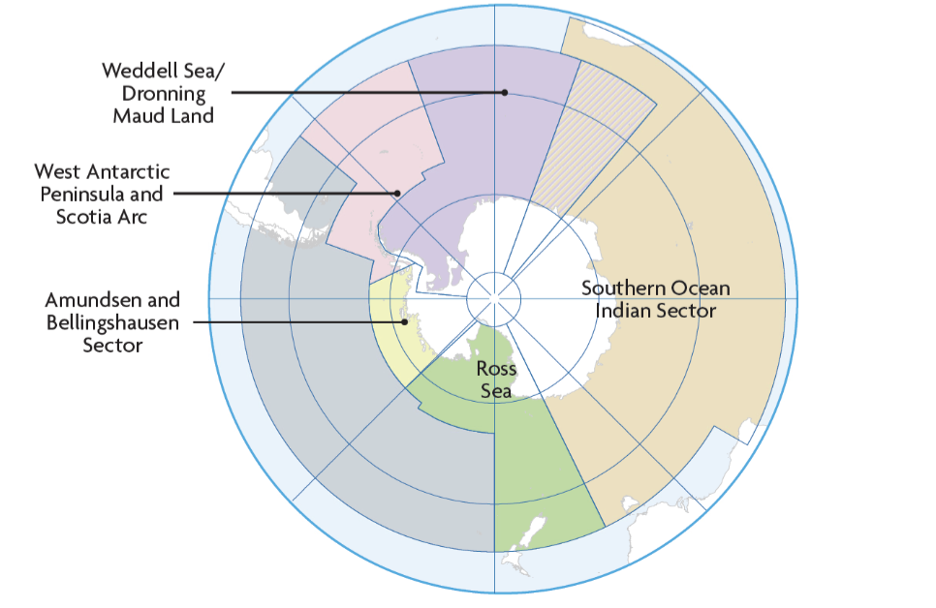
The Association of Polar Early Career Scientists (APECS) and the Southern Ocean Observing System (SOOS) are looking for an early career scientist to join the leadership teams of the following working groups :
- Amundsen and Bellingshausen Sector (ABS) RWG
- Ross Sea RWG
- Weddell Sea and Dronning Maud Land (WSDML) RWG
- West Antarctic Peninsula and Scotia Arc (WAPSA) RWG
APECS at the Svalbard Science Conference
APECS, APECS Norway and SIOS teamed up to offer two ECR workshops at the Svalbard Science Conference (SSC) 2023, which was held at Scandic Fornebu in Oslo 31 October to 1 November.
Read more ...Polar Paths: Weaving passion with profession
On 7 November 2023, the APECS International Directorate hosted the event Polar Paths: Weaving passion with profession at Storgata Camping in downtown Tromsø. The purpose of the event was to bring together the polar early career community and provide inspiration on how passions can be integrated into polar professions. Additionally, the event provided a gathering space for community members of all disciplines coming from any institution or employer. 100 people from around 20 different institutions attended.

The APECS and Arctic PASSION Sharing Circle experience
APECS and Arctic PASSION Sharing Circle
Participant report by Jessica Hall
Eighteen Arctic youth and early career professionals from around the world travelled to Sevettijärvi, Finland, located in Sápmi, to attend the APECS & Arctic PASSION Sharing Circle from 2-6 October, 2023. We were hosted by Toini Sanila and her team at Porotila Toini Sanila reindeer farm, located in Inari between the lakes Sevettijärvi and Kirakkajärvi. Our hosts were invaluable in sharing their knowledge and experiences surrounding the topics we discussed.

Antarctica Day 2023

Antarctica Day is celebrated annually on 1 December, honoring of the signing of the Antarctic Treaty in 1959. Join APECS' activities by participating in one of our contests or listening to the Antarctic-themed talks organized by the APECS International Polar Weeks 2024 / Antarctica Day 2023 and APECS Art Project Groups.
Read more ...
5th national conference of APECS Italy
 The 5th national conference of APECS Italy took place on November 8-9, 2023, in Venice. The event was made possible by a collaboration with the Italian Institute of Polar Sciences (CNR-ISP) and the Venice Institute of Science, Literature and Arts (Istituto Veneto di Scienze, Lettere ed Arti). This year, the national conference was formally dedicated to the conquest of Mount Everest as 2023 is the seventieth anniversary of Edmund Hillary and Tenzing Norgay's ascent to the summit (May 29th, 1953).