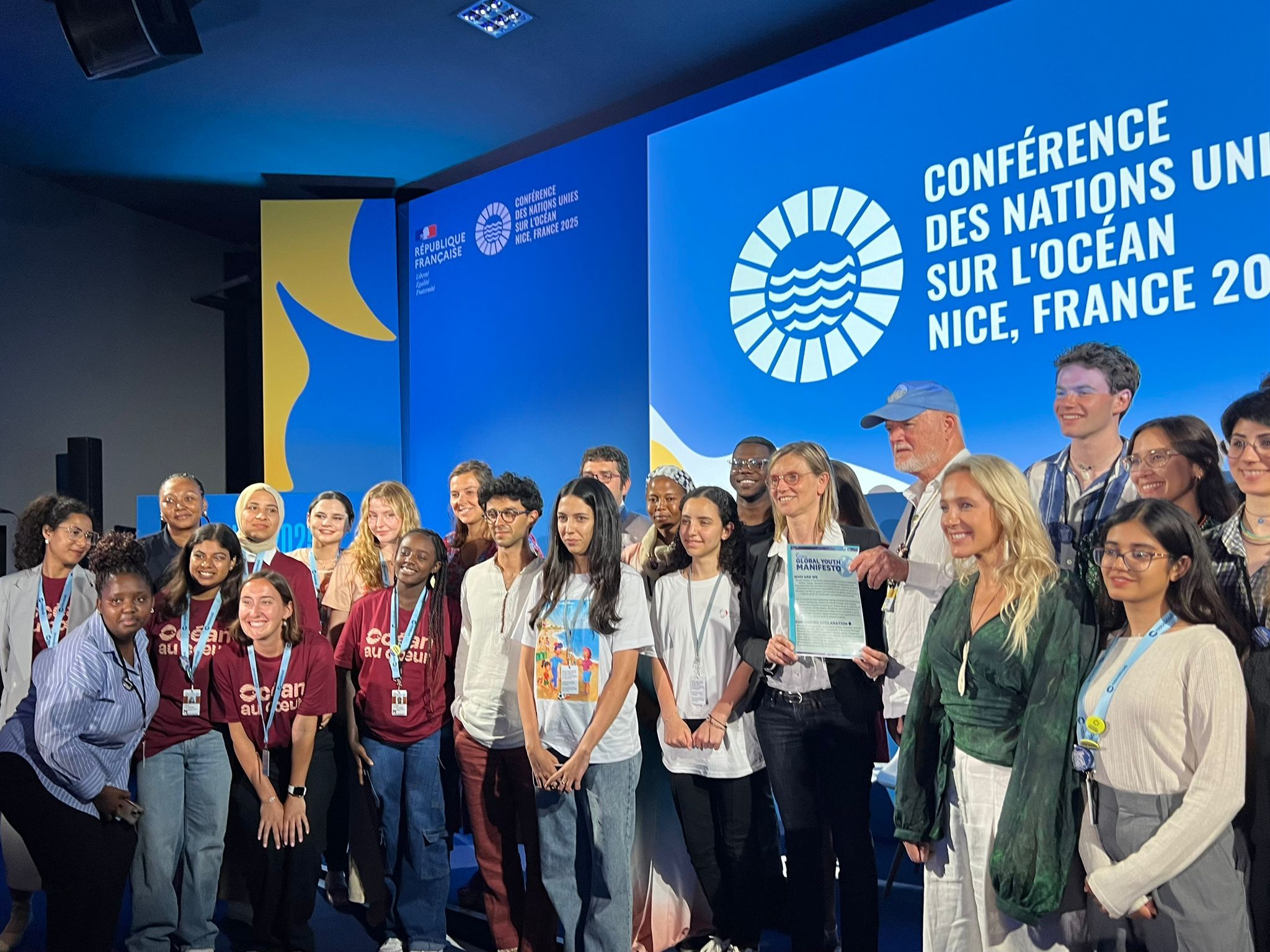
In June 2025, the Association of Polar Early Career Scientists (APECS) proudly joined the Coalition of Emerging Ocean Leaders (CEOL) — a dynamic alliance of youth-led and early-career ocean networks from around the world — launched during the United Nations Ocean Conference (UNOC3) in Nice, France.
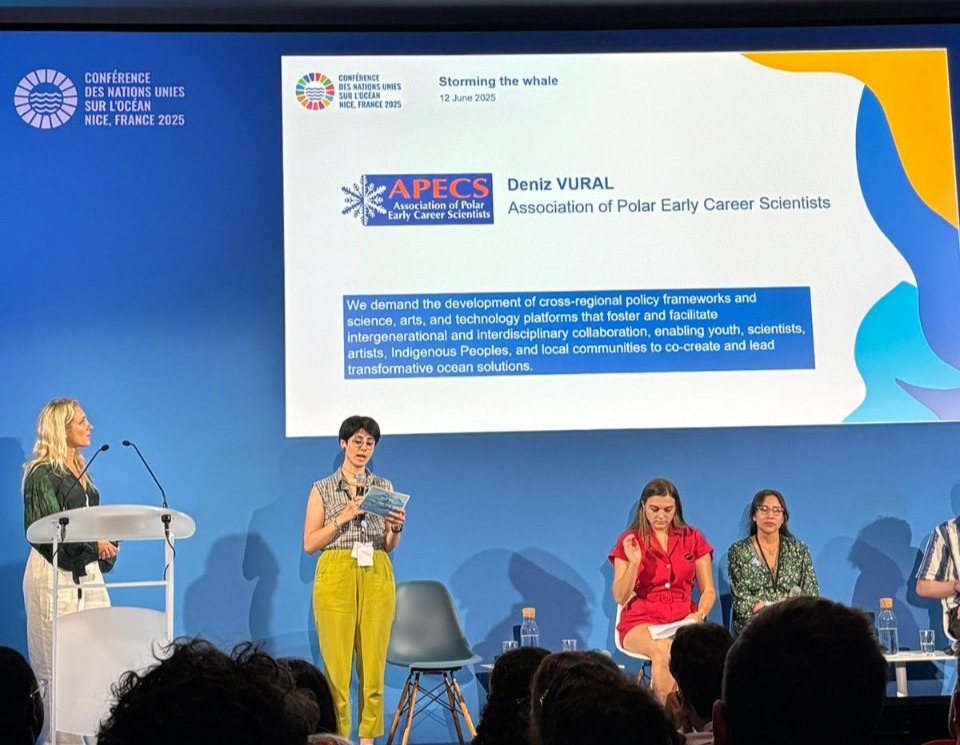
Representing a diverse community of early-career researchers, educators, and professionals dedicated to the polar and cryosphere sciences, APECS was honored to speak at the official launch of CEOL. During our address, we emphasized the critical role of inclusive polar research and ocean conservation in the lead-up to the International Polar Year (IPY) 2032–2033, highlighting the importance of ethical research, Indigenous and local knowledge systems, and environmental responsibility across all polar regions.
At the CEOL launch during UNOC3, APECS was represented in the opening speech, which I had the honor of delivering. The speech emphasized our shared commitment to inclusive polar research, the importance of integrating Indigenous knowledge, and the critical role early career scientists play in shaping ocean sustainability.
As a member of CEOL, APECS aligns with the coalition’s core goals: fostering intergenerational dialogue, advocating for inclusive governance, building network capacity, and advancing policy impact on ocean and climate issues. CEOL recognizes that youth and early career professionals must be meaningfully involved in shaping the future of ocean sustainability and stewardship.
APECS brings to this partnership a strong foundation in Diversity, Equity, and Inclusion (DEI), science-policy engagement, and environmentally responsible field practices. Our DEI Project Group offers ongoing training to strengthen Indigenous engagement, accessibility, and science communication. Our UNFCCC Project Group helps early-career researchers engage in climate negotiations and connect science with global policy processes. Meanwhile, our Responsible Science Project Group promotes low-impact polar research by raising awareness, building networks, and encouraging meaningful action. This is just one example of how APECS is contributing to ocean conservation. We are continually developing new initiatives to ensure these efforts are visible—and we invite you to be part of them.
Together with fellow CEOL networks, APECS is committed to strengthening global and regional collaboration — especially in underrepresented regions — and ensuring early career voices are heard in shaping just, equitable, and impactful ocean governance.
We invite you to learn more about CEOL’s vision and events that took place at UNOC3 (https://unocnice2025.org/), and look forward to co-creating a more inclusive, responsible, and transformative future for our ocean and polar regions.
Author: Deniz Vural, AWI, Germany