In the second week of November there will be two upcoming Arctic PASSION webinars. The second one will be on:
Webinar 2: Lake ice information in your pocket
10 November 1 PM GMT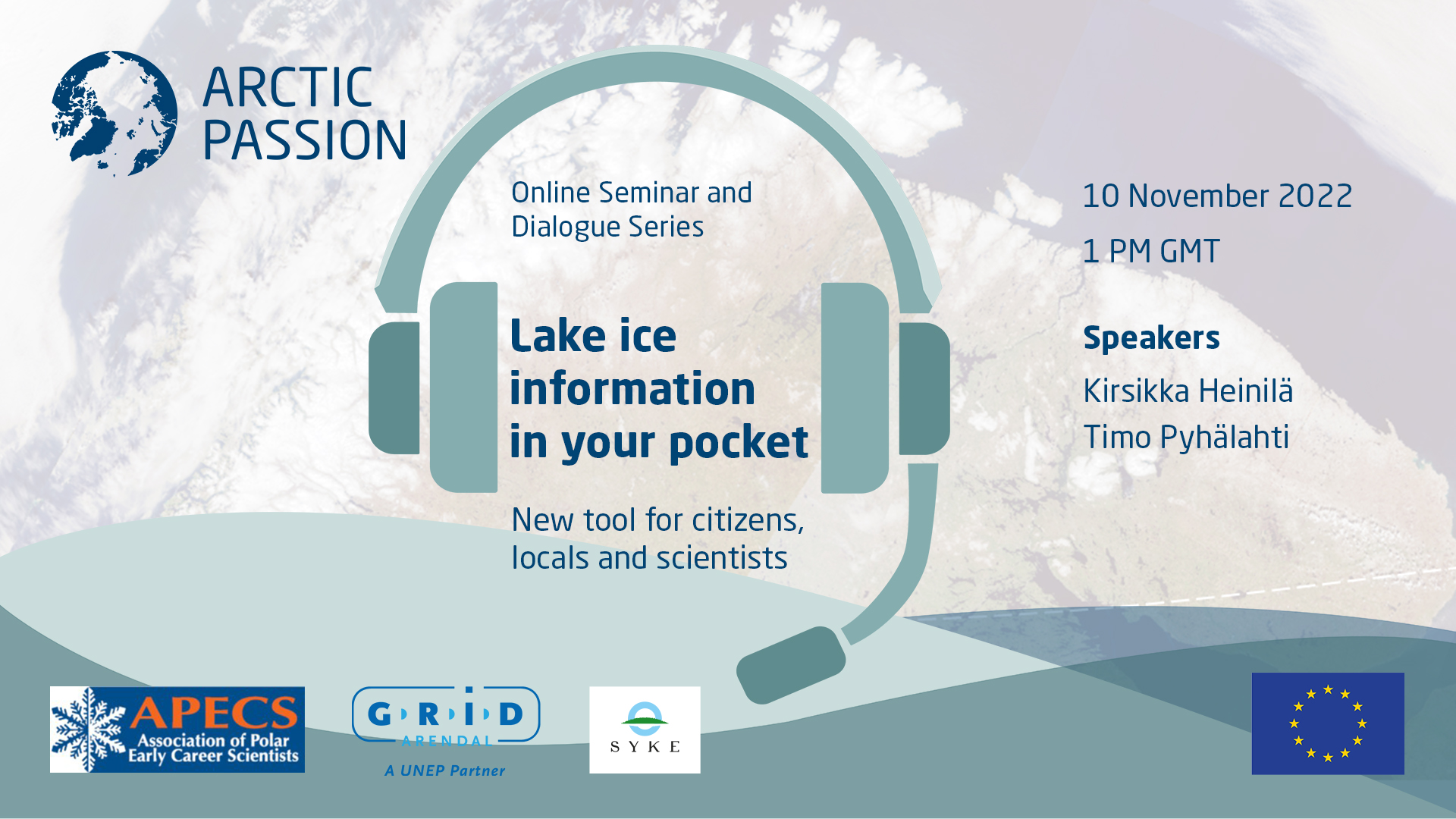

© Inga Beck, José Xavier,Aleksandr Krasnov, Inga Beck, Alexa Hasselmann (left to right)
In our APECS News, you can find news from and about the wider APECS network and our many events, activities and resources organized and developed by the APECS leadership, project groups and National Committees.
If you want to submit APECS news for this page, please use the link below. If you have any questions, This email address is being protected from spambots. You need JavaScript enabled to view it.
We keep only the news of the last 3 months on this page. Older news can be accessed in our APECS News Archive.
In the second week of November there will be two upcoming Arctic PASSION webinars. The second one will be on:
Webinar 2: Lake ice information in your pocket
10 November 1 PM GMT
In the second week of November there will be two upcoming Arctic PASSION webinars. The first one will be on:
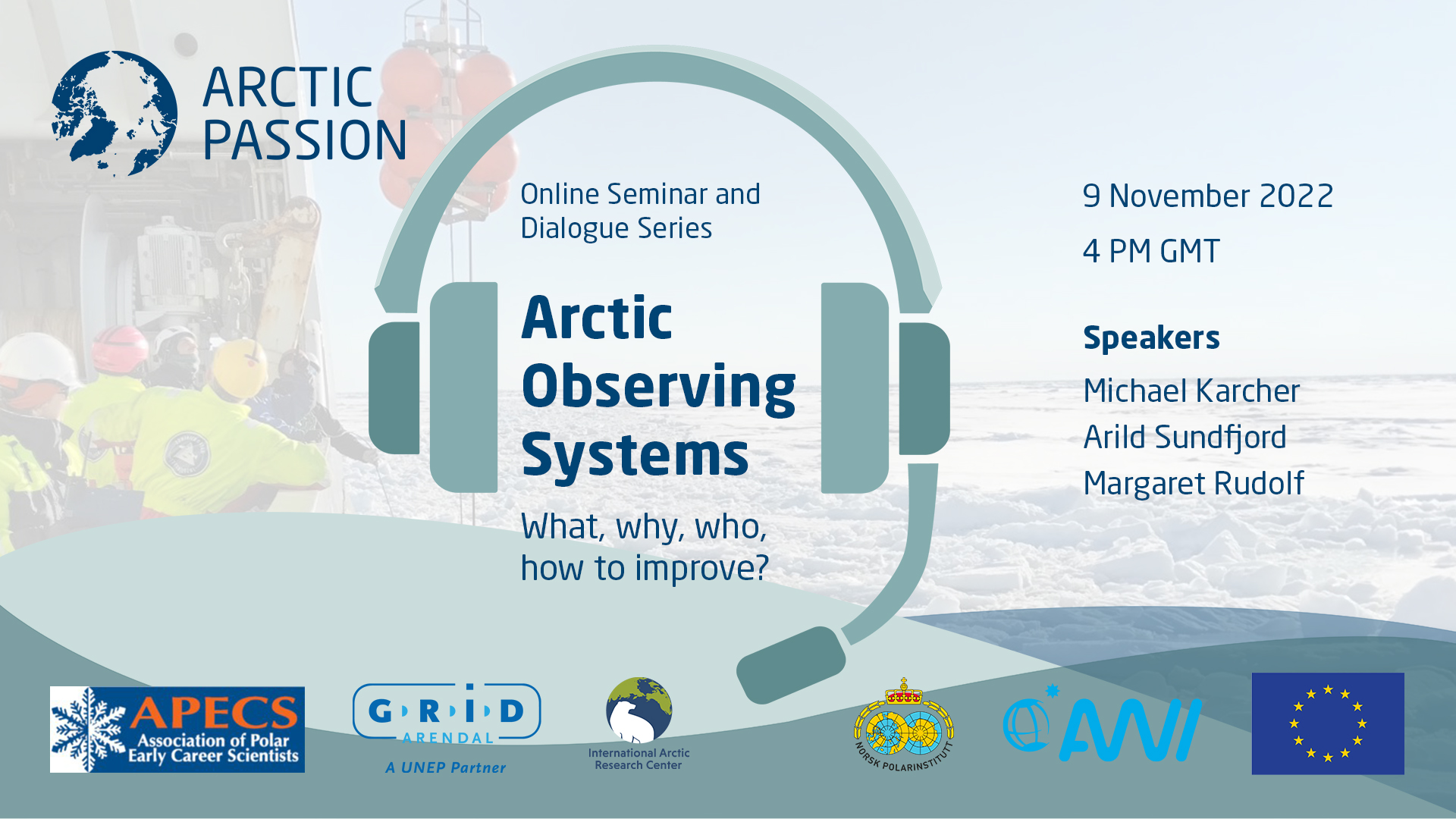
Arctic Observing Systems - What, why, who and how to improve
9 November 4 PM GMT
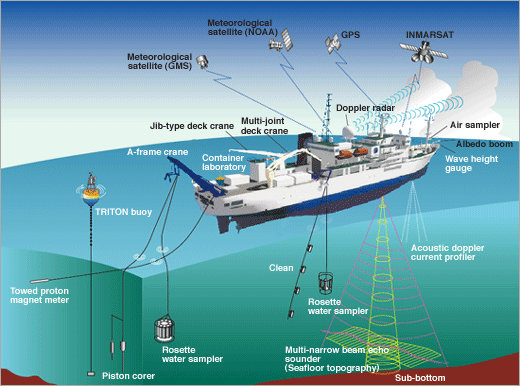
JAMSTEC, in collaboration with APECS, calls for proposals for research and observation projects to be conducted on the early career scientist (ECS) R/V Mirai 2023 Arctic Cruise. The target area of the cruise is the Pacific Arctic region including the Beaufort, Chukchi, and northern Bering seas. Participants have two options for embarkation: Shimizu, Japan on 24 August 2023 or Dutch Harbor, Alaska, USA on 4 September 2023. All participants will disembark at Dutch Harbor, Alaska, USA on 4 October 2023.
Read more ...
The current and past APECS leadership has organized training sessions to get everyone involved in the new APECS term (which started 1 October)!
Read more ...
APECS' new term began on 1 October. We are now inviting all APECS members to join our activities as members of our Project Groups! This is one of the easiest ways to get more involved in APECS and to contribute in a way that is best suited to your interests and skills. Hosting meetings, taking notes, research, writing, graphic design, social media posting, sending emails - these are just a few examples of the ways you can contribute to APECS project groups.
Read more ... Join us in celebrating International Polar Week from 26 to 30 September! Click here for more info, the programme and further activities organised by APECS National Committees.
APECS International Polar Week is a traditional APECS event held twice a year during the equinoxes (March and September), that is, the dates when the Sun is exactly above the Equator, making day and night of approximately equal length in the northern and southern hemispheres.
Read more ...On the 12th of September (National Video Game Day in the US) at 5PM (GMT), APECS organizes a webinar in collaboration with Alterna (see below) on the use of cartography, mapping, and scientific data in creating a video game as an alternative way to visualize climate-driven changes in the Arctic to the wider public. The project is called Monsters and Ghosts of the Far North: Collective cartographies.
Read more ...
The International Arctic Science Committee (IASC), in cooperation with the Prince Albert II of Monaco Foundation and the Association of Polar Early Career Scientists (APECS), is launching its IASC Fellowships Program 2023.
Read more ...We appreciate that it has been a very active term for Project Groups as well as National Committees! It is now time to spend some quality time together as part of APECS Social Gathering activities! Thanks to our members' votes, we are going to have a Speed Networking event on 12 August 2022 at 11.30 GMT! Please save the date and note that the event has a limited capacity of 100 people in order to ensure interactive involvement.
Register here: https://bit.ly/3vgz5pi
Read more ...
Do you want to contribute to APECS and join our Council? Applications for Project Group Leader positions and nominations for National Committee/partner organization representatives are now open! The deadline for Project Group Leader applications and National Committee/partner organization representative nominations is 25 July 2022 at 23:59 GMT.
Read more ...